FACE TO FACE (2-days)
Assessment & management of the dizzy patient –
Accredited Practical Vestibular Course
Associate Professor James McLoughlin B.App.Sc.(Physio) MSc (Cl. Neuroscience), PhD
James has been running updated versions of this course since 2007. It prioritises the key knowledge and skills to assess and treat people with all the most common types of dizziness. James incorporates the most up-to-date evidence with over a quarter of a century of experience!
This course covers the practical component of the Advanced Vestibular Accreditation Pathway
Learn more about the Advanced Accreditation Pathway hereLecture: What can cause dizziness?
By the end of this lecture participants will be able to;
- Describe the anatomy and physiology of the vestibular system
- Describe the role of the central nervous system involved in the perception of movement
- Explain the role the vestibular system plays in balance, visual gaze stability and spatial perception

Lecture: What are the most common presentations in ED & general practice?
- List the common causes of peripheral & central vestibular dysfunction
- Describe common clinical presentations
- Explain the relationship between Anxiety & Dizziness
- Explain the relationship between Dizziness & Falls
Practical: Assessing Oculomotor and Balance Function
- Perform an oculomotor exam and head impulse test to screen for signs and symptoms of vestibular dysfunction
- Recognise common movement behaviours in vestibular dysfunction
- Assess balance and interpret your findings
- Assess & Recognise signs and symptoms that require further medical investigation, including differentials for central & peripheral vestibular dysfunction
- Assess using the HINTS+ protocol in Emergency Department, understand the interpretation in the Acute context
- Documenting your findings and communicating these effectively with medical practitioners.
Lecture: Benign Paroxysmal Positional Vertigo (BPPV)
• Explain the concepts of Canalithiasis and Cupulolithiasis in BPPV and recognise common oculomotor signs during head manoeuvres
• Perform the Hallpike-Dix, Bow/Lean, B-HRT and Roll manoeuvres to assess for anterior, posterior and horizontal canal BPPV + interpretation of findings.
• Perform special tests to determine lateralization of Horizontal Canal BPPPV
• Be aware of some atypical BPPV presentations
Practical: BPPV treatment
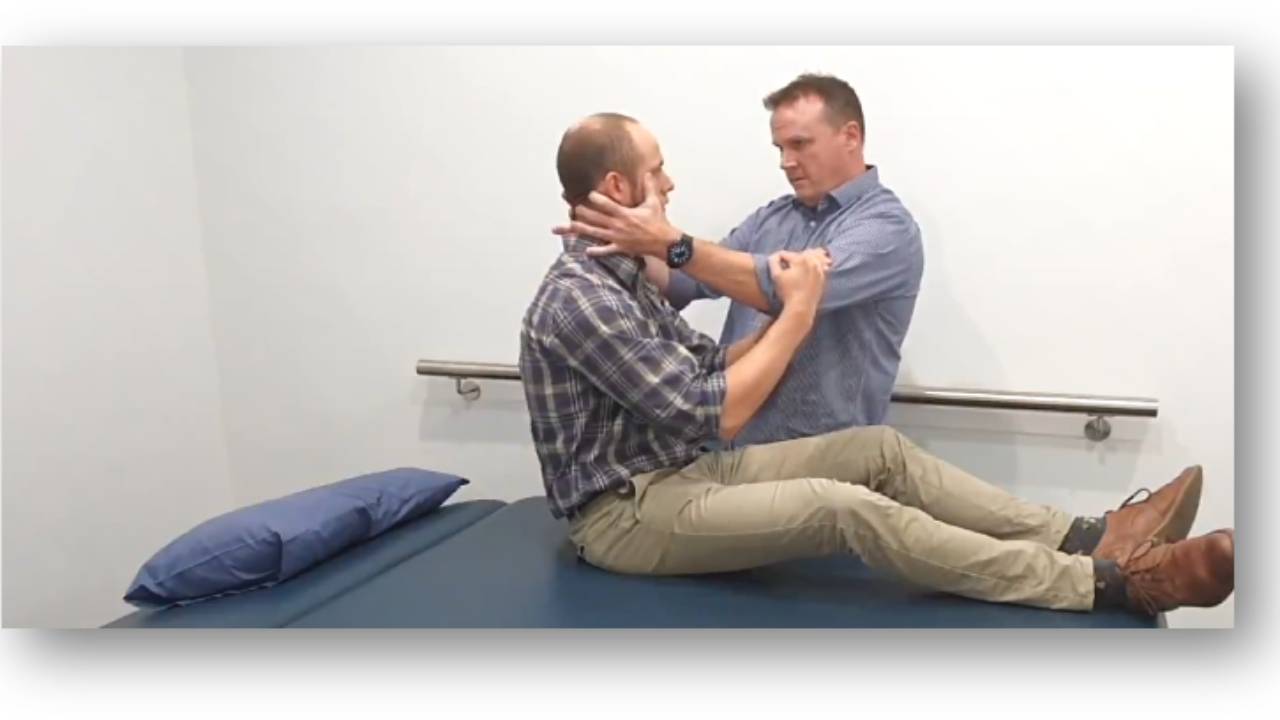
• Diagnose various forms of BPPV and perform appropriate Canal Repositioning Manoeuvres
• Perform CRM/ Epley’s + others – consider individual factors that will influence choice of manoeuvre
• Perform Roll treatments, BBQ/Kim, Appian/Gufoni + others
• Treat both Canalithiasis and Cupulolithiasis BPPV, short/long arm of HC
• Provide key educational points for patients/carers/family
• Communication with medical & allied health colleagues.
• Prescribe Home Canal Repositioning Exercises
Lecture: Mechanisms of recovery
• Outline the Principles of neuroplasticity, adaptation, habituation, substitution
• Explain Gaze stability control contributions at different speeds
• Explain Head Stabilisation in Space & Cervical aspects of sensorimotor control
• Explain the concept of co-ordinate transformation
• Explain vestibular signs & symptoms following concussion and possible contributing factors
• Explain both risk factors and presentations of Persistent Postural Perceptual Dizziness (PPPD)
• Organise referrals to Vestibular Rehabilitation, Neurology, Otolaryngology, Opthalmology/Orthoptists
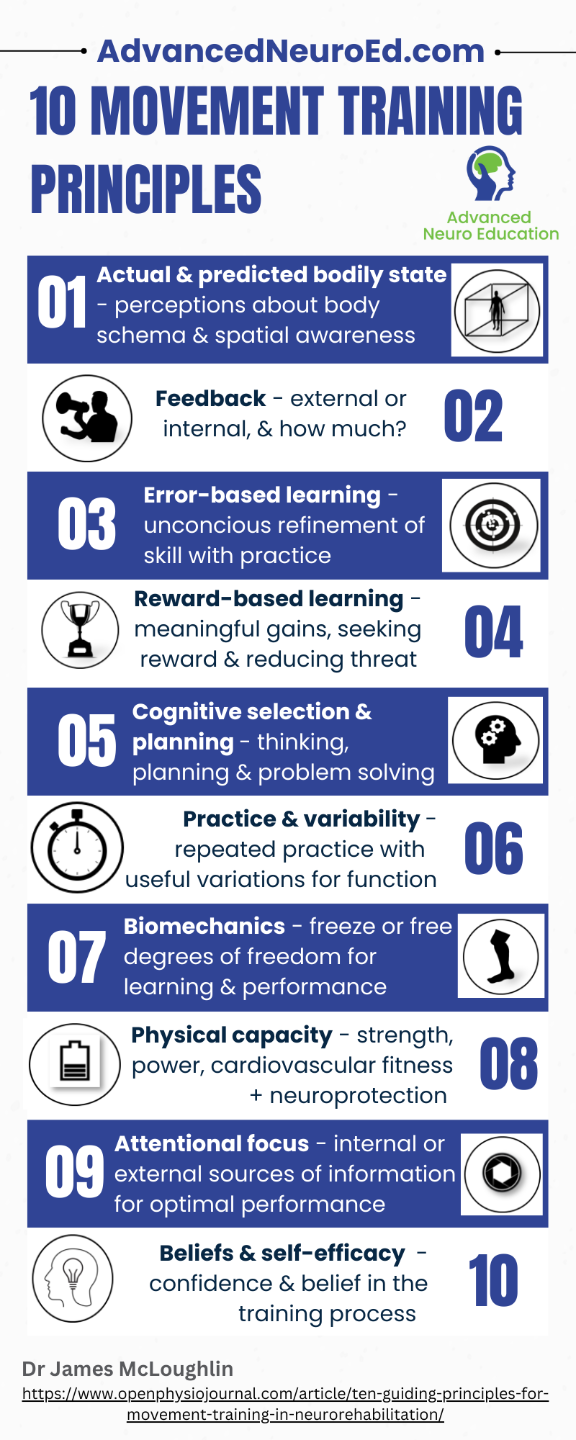
Final session: The 10 movement training principles approach to clinical reasoning
• Develop a working diagnosis for a variety of common clinical presentations.
• Develop a basic management plan based on your clinical findings
• Clinically reason through the possible processes of recovery that you wish to enhance
• Outline the clinical reasoning process & rehabilitation design using the Ten Movement Training Principles (McLoughlin 2020) for acute, subacute and chronic vestibular presentations.
• Steps to developing a clinical expertise for Advance Practice in Vestibular Rehabilitation - for tricky presentations that overlay with many other conditions.